
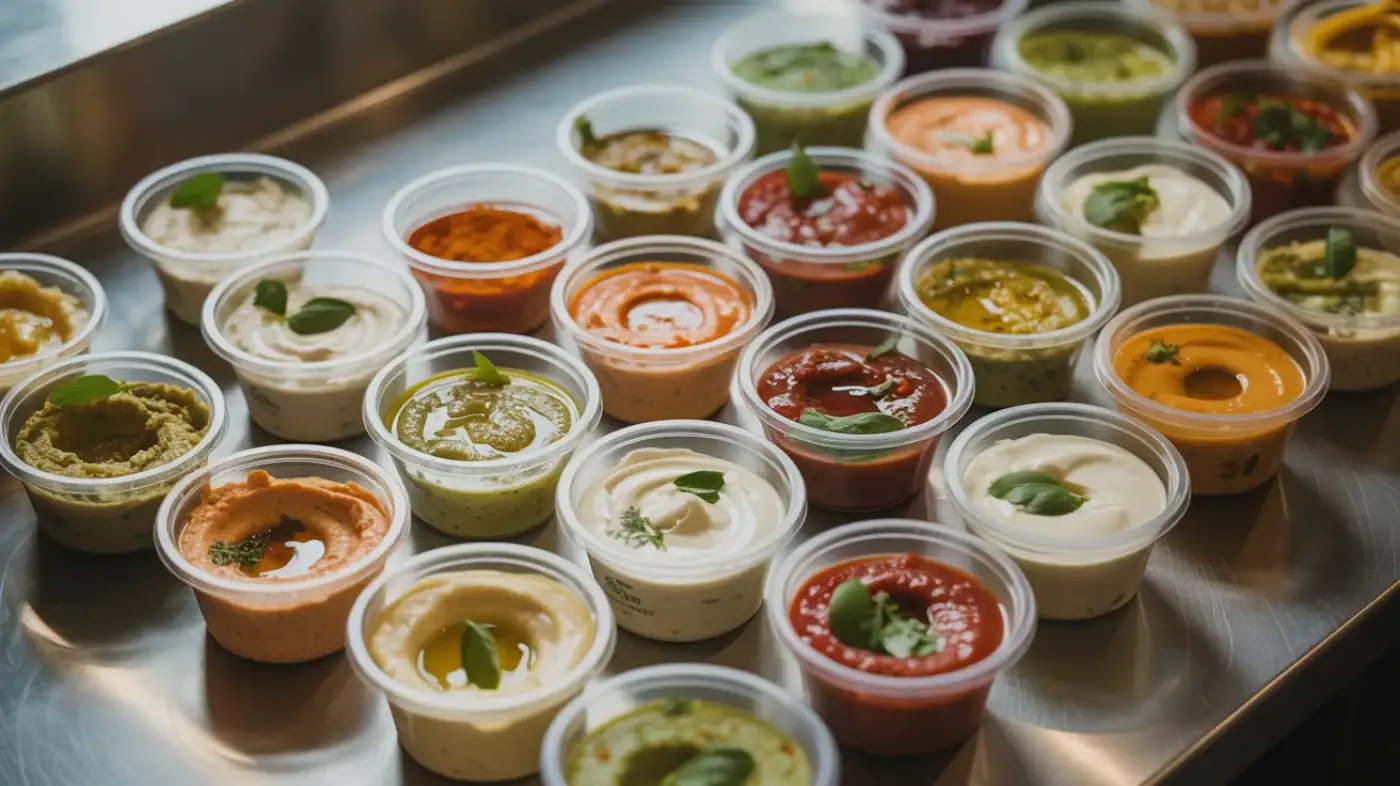
How Hummus Cups Are Filled, Topped & Sealed
Purpose-built for the world's fastest-growing dip category. The SDH-R fills, seals, and caps hummus cups at 30 per minute with ±0.5% accuracy.
This page covers filling hummus as an application. For full machine specifications, pricing, and buying information, see the Hummus Filling Machine page.
Hummus is the SDH-R's signature product. The servo-driven volumetric piston filler handles classic, roasted garlic, roasted red pepper, lemon herb, and every other hummus variant with consistent fill weights and clean cup edges. Chickpea-based products have a medium-to-thick viscosity that the SDH-R's adjustable piston stroke manages precisely — from smooth restaurant-style hummus to chunky rustic blends with whole chickpeas and pine nuts.
Why the SDH-R Excels at Hummus
Servo-Driven Piston Accuracy
Volumetric piston filling delivers ±0.5% weight accuracy across classic, chunky, and whipped hummus textures — critical for retail compliance and cost control.
Multi-Component Capability
Fill hummus base + olive oil drizzle + paprika garnish in a single cup pass. Up to three filler stations work simultaneously for layered presentations.
MAP Nitrogen Flushing
Modified Atmosphere Packaging replaces oxygen with nitrogen, extending refrigerated hummus shelf life from 7–10 days to 30–45+ days for retail distribution.
Quick Flavour Changeover
Switch between classic, garlic, jalapeño, roasted red pepper, and other flavours in under 15 minutes via PLC recipe recall and tool-free hopper swap.
SDH-R Configuration for Hummus
Products We Fill
Available In These Markets
How the SDH-R Fills Hummus
Fully automatic process from empty cup to sealed product — no manual labour required
Cup Denesting
Empty cups are automatically separated from a nested stack and placed into the rotary table carriers. The pneumatic denester handles round, square, and rectangular cups from 2oz to 32oz — ideal for the standard hummus cup formats your customers expect.
Servo-Driven Filling
The volumetric piston filler draws a precise dose of hummus and dispenses it into the cup. Servo control adjusts stroke length and speed per recipe, maintaining ±0.5% fill-weight accuracy across production runs. The PLC stores recipes for quick changeovers between product variants.
Membrane Heat Sealing
Roll-stock film is drawn across the filled cup and heat-sealed to create a tamper-evident, airtight membrane. Sealing temperature, pressure, and dwell time are individually controlled to match your specific film and cup material combination.
Snap-On Lid (Optional)
A pick-and-place mechanism applies a consumer-friendly snap-on plastic lid over the membrane seal. This two-barrier system provides both tamper evidence and reclosability — the standard expected by grocery retailers and foodservice distributors.
MAP Nitrogen Flush (Optional)
Modified Atmosphere Packaging replaces oxygen in the headspace with food-grade nitrogen immediately before sealing. For hummus, this typically extends refrigerated shelf life from 7–10 days to 30–45+ days — a requirement for most retail distribution channels.
Hummus Cup Packaging: Texture, Toppings, Allergens and Shelf Life
Most hummus packaging problems start before the cup reaches the filler. Smooth hummus is a shear-thinning paste: it flows more easily while it is being pumped and firms up again once it rests in the cup. That behavior shifts with temperature, so a batch that cuts off cleanly at the start of a shift can begin tailing and smearing the cup flange as it warms in the hopper. Holding the product at a consistent temperature from mixer to hopper does more for clean cups than any nozzle change. Air is the other variable. Over-processed and whipped hummus entrain air, and because a volumetric piston always displaces the same volume, aerated product leaves the nozzle lighter. If fill weights drift during a run, check density before adjusting the stroke, and consider the optional weight checker with a feedback loop.
Configuration choices for common hummus SKUs
How hummus formats map to SDH-R configuration
| Hummus format | What changes on the line | Typical SDH-R setup |
|---|---|---|
| Classic smooth, 8-10 oz retail tub | Clean cut-off and a level surface under the film | Servo piston with cut-off or suck-back nozzle; membrane seal plus snap-on lid |
| Rustic or chunky with whole chickpeas | Particulates can bridge a narrow valve | Large-bore valving and a slower piston stroke |
| Topped hummus (oil, paprika or za'atar, chickpeas, pine nuts) | Toppings must land in the center, never on the flange | Peristaltic pump for oil on station 2; garnish or vibration filler on station 3 |
| 2 oz snack and meal-kit cups | Fill sits near the 50 g lower limit | Fill weight and cup tooling confirmed with our engineers |
| Retail tubs for long distribution | Shelf life must cover the supply chain | Nitrogen MAP flush with barrier cup and film |
Topped hummus is where seal integrity is most often lost. Olive oil on the flange stops the membrane from bonding, and paprika or spice dust trapped under the film can create channel leaks that let oxygen back in and undo the benefit of MAP. The fix is sequencing and placement: the piston lays down the base, the oil lands in the center well, the garnish falls last, and the cup indexes straight to the sealing station, where temperature, pressure and dwell are stored with each recipe. Running up to three fillers on one turret is explained on our multi-head cup filling machine page.
Allergens and sanitation
Tahini is ground sesame, and sesame became the ninth major US food allergen on January 1, 2023 under the FASTER Act, so nearly every hummus SKU carries a sesame declaration. Pine-nut toppings add tree nuts. The SDH-R's sub-15-minute recipe changeover is meant for flavor switches that share an allergen profile; moving between allergen profiles calls for a full, validated clean, which the 304 stainless steel construction, tool-free strip-down and optional CIP system are designed to support under your FSMA preventive controls or HACCP plan.
Shelf life is a system
Nitrogen flushing reduces residual oxygen to 0.3-0.4% and can take refrigerated hummus from roughly 7-10 days to 30-45+ days, but only when the cup and film are oxygen barriers, the seal is continuous and the product goes in with a low microbial load. Our guide to MAP nitrogen flushing and dip shelf life covers those variables in detail.
If you are comparing equipment rather than process, our hummus filling machine page covers SDH-R configurations, pricing from $45,000 and the 8-12 week lead time. For the planning steps that come before a purchase, read how to automate hummus cup filling.
How Hummus Cups Are Filled, Topped & Sealed — Frequently Asked Questions
Retail hummus is most often packed in 8 oz and 10 oz tubs, with 16 oz family tubs and 2 oz snack or meal-kit cups alongside them. The Hummus Pack SDH-R runs 4, 8, 10 and 16 oz cups as standard and custom cups from 2 to 32 oz with matching change parts, within a 50-500 g fill range. Round, square and rectangular cups are supported, and stored PLC recipes make size changes routine.
Oil on the cup flange prevents the membrane film from bonding. On the SDH-R, the servo piston fills the hummus base first, a peristaltic pump then places olive oil in the center of the cup, and garnish is added last before the cup indexes straight to sealing. Drip-free suck-back nozzles, a conservative fill height, and seal temperature, pressure and dwell stored per recipe keep flanges clean and seals continuous.
Yes, within limits. Whole chickpeas mixed into a rustic hummus can pass through the SDH-R's large-bore valving when the piston stroke is slowed to avoid crushing them. For a visible topping, it is usually better to add chickpeas or pine nuts from a separate garnish filler on the third station so they sit on the surface. Our engineering team confirms particulate size and placement from your recipe details before quoting.
In the United States, yes. Tahini is made from sesame, and sesame became the ninth major food allergen on January 1, 2023 under the FASTER Act, so hummus containing tahini must declare it. Canada also lists sesame among its priority allergens. On a shared SDH-R line, schedule sesame-free products before hummus and complete a validated clean before switching back, using the machine's tool-free strip-down and optional CIP system.
A volumetric piston filler doses a fixed volume, so anything that changes product density changes the weight in the cup. In hummus, the usual causes are air whipped in during processing, temperature rising in the hopper and batch-to-batch moisture differences. Hold the product at a steady temperature, avoid over-mixing and check density between batches. The SDH-R's optional weight checker with a feedback loop corrects drift automatically, helping hold its rated ±0.5% fill accuracy.
The SDH-R is rated at up to 30 cups per minute on a dry cycle, which is 1,800 cups per hour. With real hummus, toppings and MAP, real-world output is typically 18-25 cups per minute, or roughly 1,080-1,500 cups per hour, depending on cup size and fill weight. Producers needing well above 30 cups per minute of a single SKU are usually better served by an inline line; see our rotary vs inline comparison.
Ready to Package Hummus?
Get a personalized SDH-R configuration quote for your product and production volume.