
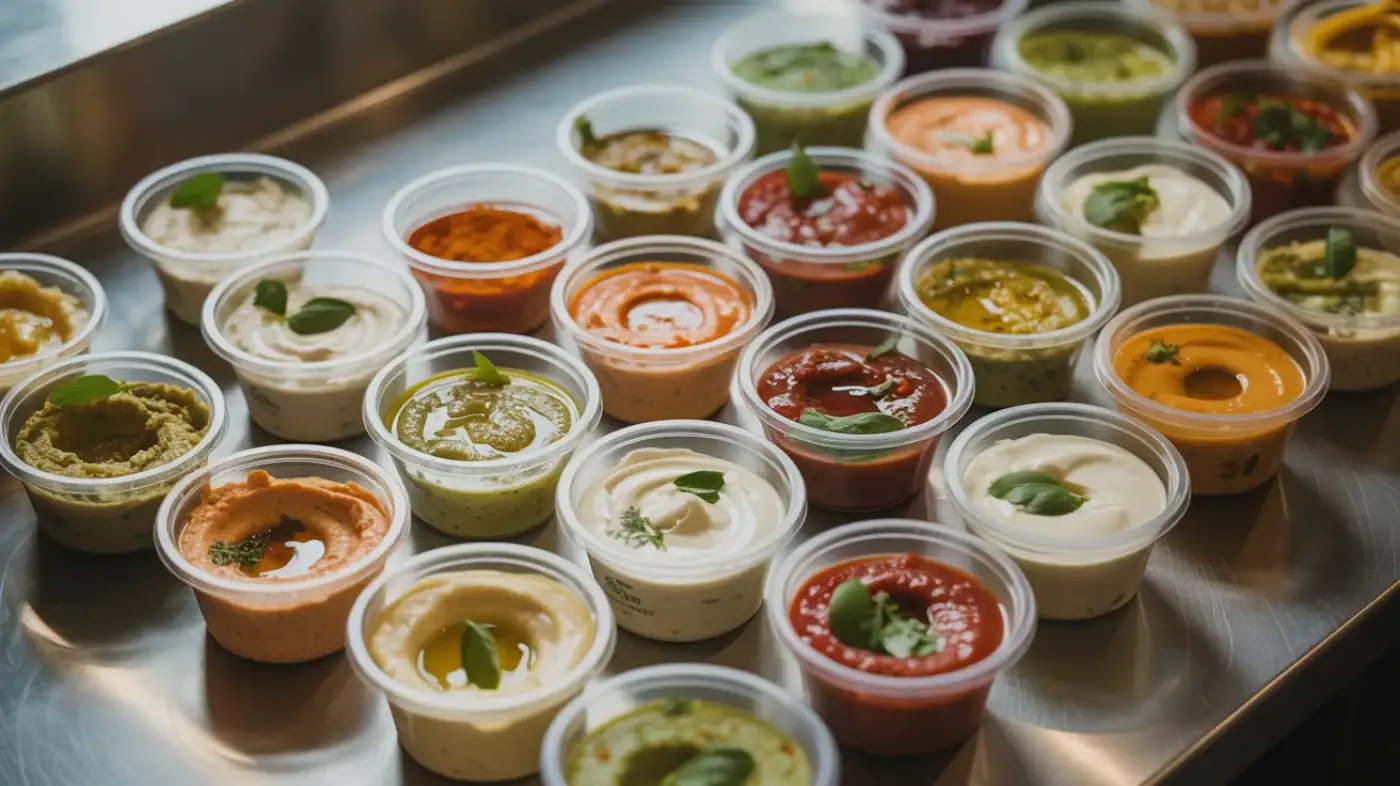
Pesto Cup Packaging: Oil, Basil & Clean Seals
Oil-based pastes, herb pestos, tapenades, and olive spreads packaged with precision. The SDH-R handles oil separation and herb particulates seamlessly.
Pesto and Mediterranean-style dips present a specific challenge: oil separation. Basil pesto, sun-dried tomato pesto, olive tapenade, and artichoke dips naturally separate into oil and paste phases during storage and handling. The SDH-R's continuous agitation hopper keeps the product homogeneous during filling, while the servo piston handles the oil-rich consistency without dripping or stringing between cups.
Purpose-Built for Oil-Based Pastes
Anti-Separation Agitation
The hopper includes a motorized paddle agitator that maintains product homogeneity, preventing oil from pooling on the surface during filling runs.
Drip-Free Cutting
The servo piston's precise retraction and nozzle design prevent oil-based products from stringing or dripping between cups, keeping cup rims clean for consistent sealing.
Herb & Nut Particulate Handling
Fills pesto with pine nuts, basil leaves, garlic pieces, and sun-dried tomato chunks up to 10mm without jamming the filling mechanism.
CE-Certified for EU Markets
Full CE marking for EU Machinery Directive compliance — serving Italian, French, Spanish, and Greek producers exporting across Europe.
SDH-R Configuration for Mediterranean
How the SDH-R Fills Mediterranean
Fully automatic process from empty cup to sealed product — no manual labour required
Cup Denesting
Empty cups are automatically separated from a nested stack and placed into the rotary table carriers. The pneumatic denester handles round, square, and rectangular cups from 2oz to 32oz — ideal for the standard mediterranean cup formats your customers expect.
Servo-Driven Filling
The volumetric piston filler draws a precise dose of mediterranean and dispenses it into the cup. Servo control adjusts stroke length and speed per recipe, maintaining ±0.5% fill-weight accuracy across production runs. The PLC stores recipes for quick changeovers between product variants.
Membrane Heat Sealing
Roll-stock film is drawn across the filled cup and heat-sealed to create a tamper-evident, airtight membrane. Sealing temperature, pressure, and dwell time are individually controlled to match your specific film and cup material combination.
Snap-On Lid (Optional)
A pick-and-place mechanism applies a consumer-friendly snap-on plastic lid over the membrane seal. This two-barrier system provides both tamper evidence and reclosability — the standard expected by grocery retailers and foodservice distributors.
MAP Nitrogen Flush (Optional)
Modified Atmosphere Packaging replaces oxygen in the headspace with food-grade nitrogen immediately before sealing. For mediterranean, this typically extends refrigerated shelf life from 7–10 days to 30–45+ days — a requirement for most retail distribution channels.
Pesto Cup Packaging: Oil Separation, Basil Color and Allergen Control
Pesto is an oil-continuous suspension: fine particles of basil, hard cheese, nuts and garlic carried in olive or sunflower oil. Unlike a water-based dip, it has little structure to hold those solids in place, so a hopper left standing develops an oil layer on top and a denser paste underneath. A volumetric piston always displaces the same volume, and because oil is lighter than the solids, a stratified feed shows up as weight variation and as cups that look oily on one run and dry on the next. The answer is a homogeneous feed: an agitated buffer tank upstream, or small, frequent hopper refills. Hopper configuration for your recipe is confirmed with our engineering team.
Why oil and heat seals do not mix
An oil film on the cup flange keeps the membrane from bonding, leaving weak spots that may pass a visual check and still leak in distribution. A drip-free suck-back nozzle, a fill speed tuned to avoid splashing and a fill height that leaves the flange untouched do most of the work. Seal temperature, pressure and dwell are stored with each recipe, so an oilier SKU can run with its own settings. Programmable stroke and speed profiles are explained on the servo cup filler page.
Pesto and Mediterranean SKUs on one line
Typical pesto-family products and SDH-R setup
| Product | Main consideration | SDH-R setup |
|---|---|---|
| Classic basil pesto | Oil separation, basil darkening, milk and tree nuts | Suck-back nozzle, optional nitrogen MAP, scheduled before the full clean |
| Nut-free or dairy-free pesto | Must stay free of tree nuts and milk | Run first, after a validated clean |
| Sun-dried tomato and red pepper pesto | Thicker paste with larger pieces | Large-bore valving and a slower piston stroke |
| Olive tapenade | Chunky, salty paste | Large-bore valving; salt level shared when quoting |
| Pesto with an oil cap | Thin oil layer over the surface | Peristaltic pump on the second station |
Changeover between pesto flavors that share an allergen profile uses stored PLC recipes and takes under about 15 minutes. Moving from conventional basil pesto to a nut-free or dairy-free SKU is a full clean, not a recipe change, and should be planned into the production schedule rather than squeezed between runs.
Color, shelf life and food safety
Basil darkens with oxygen and light. Nitrogen MAP lowers residual oxygen to 0.3-0.4%, and for refrigerated dips it typically extends shelf life from roughly 7-10 days to 30-45+ days, depending on the product. Because pesto combines garlic and herbs in oil, your HACCP or FSMA preventive controls plan (21 CFR Part 117) should also address acidification, refrigeration and shelf-life validation; packaging protects quality, it does not replace those controls.
Most basil pestos also declare milk and tree nuts under FALCPA, so schedule nut-free and dairy-free SKUs first and finish the day with conventional pesto. The 304 stainless steel construction, tool-free strip-down and optional CIP system are designed to support a validated clean before allergen-free products return. EU exporters should request food-contact material documentation under Regulation (EC) 1935/2004 alongside the machine's CE documentation.
For SDH-R pricing, options and lead time, see our dedicated pesto filling machine page. The MAP shelf-life guide covers barrier cups and films, and you can contact our engineering team to review your recipe, cup size and target output.
Pesto Cup Packaging — Frequently Asked Questions
Pesto separates into oil and solids when it stands, and a volumetric piston filler doses a fixed volume. When the feed stratifies, some doses are oil-rich and lighter while others are solids-rich and heavier. Keeping the product homogeneous upstream, with an agitated buffer tank or frequent small refills, is the main fix. On the Hummus Pack SDH-R, the optional weight checker with a feedback loop corrects remaining drift automatically.
Keep oil off the flange. On the Hummus Pack SDH-R, a drip-free suck-back nozzle prevents oil from tailing between cups, fill speed is tuned to avoid splashing, and the fill height leaves the sealing area untouched. Seal temperature, pressure and dwell are stored per recipe, so oilier SKUs run with their own settings. Routine seal checks at start-up and after each recipe change catch problems before cups leave the line.
Yes, in most recipes. Ground or chopped pine nuts, grated hard cheese and basil pieces pass through the SDH-R's large-bore valving, and the servo-driven piston can run a slower stroke for chunkier pastes such as sun-dried tomato pesto or olive tapenade. Whole nuts or very coarse pieces need checking, so share your recipe and particle size with the Hummus Pack engineering team before quoting.
Most basil pesto contains milk from hard cheese and tree nuts such as pine nuts, cashews or walnuts, both major allergens under FALCPA in the United States. On a shared SDH-R line, run nut-free and dairy-free SKUs first, then conventional pesto, followed by a validated clean using the 304 stainless steel machine's tool-free strip-down and optional CIP system before allergen-free products return.
Pesto is usually sold in smaller tubs than dips because it is used by the spoonful. The Hummus Pack SDH-R runs 4, 8, 10 and 16 oz cups as standard and custom cups from 2 to 32 oz with matching change parts. Its fill range is 50-500 g, so small pesto tubs fit comfortably, while 2 oz portion cups sit at the low end and anything under 50 g is outside the standard range.
It helps. Basil darkens through oxidation, and nitrogen MAP on the Hummus Pack SDH-R reduces residual oxygen in the cup to 0.3-0.4% before sealing, which slows that change. Light exposure, recipe, blanching or acidification choices and the barrier properties of the cup and film also affect color. Validate the result with a shelf-life study; our MAP shelf-life guide explains the variables.
Ready to Package Mediterranean?
Get a personalized SDH-R configuration quote for your product and production volume.